
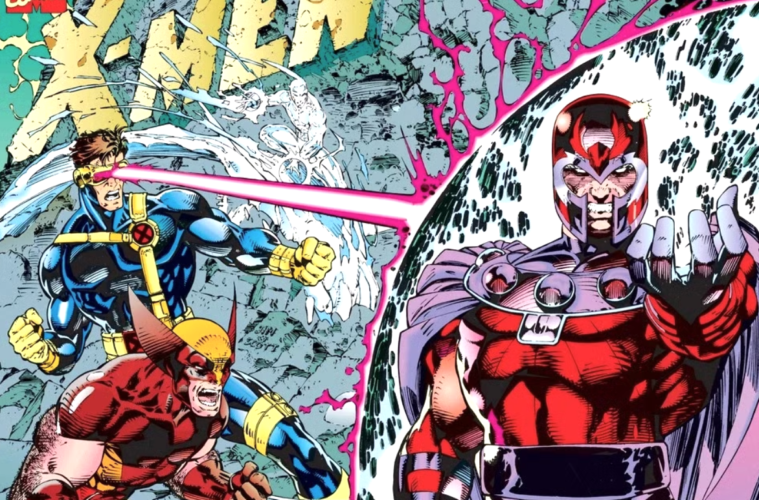
Few artists have left a mark on comics quite like Jim Lee. Bursting onto the scene at Marvel in the late 1980s and early 1990s with acclaimed runs on Punisher War Journal and X-Men, Lee quickly became one of the industry’s defining talents. His dynamic storytelling and unforgettable artwork helped redefine Marvel’s visual identity during one of its biggest eras. In 1992, he became one of the founders of Image Comics, launching the WildStorm universe before eventually making the jump to DC. There, he created landmark works such as Batman: Hush and ultimately rose to become the company’s President, Publisher and Chief Creative Officer. Few careers have had a greater impact on the comic book medium.
Telling the story of a career like that isn’t easy. That’s where Stuart Moore comes in. An award-winning writer, editor, and comics historian, Moore has spent decades working across nearly every corner of the industry. He co-authored the The Zodiac Legacy trilogy with Stan Lee, wrote Marvel novels like Thanos: Death Sentence, and contributed stories to franchises including Star Trek, Transformers, and Conan the Barbarian. That mix of creative and editorial experience made him a natural choice to write Marvel Artist Archive: Jim Lee.
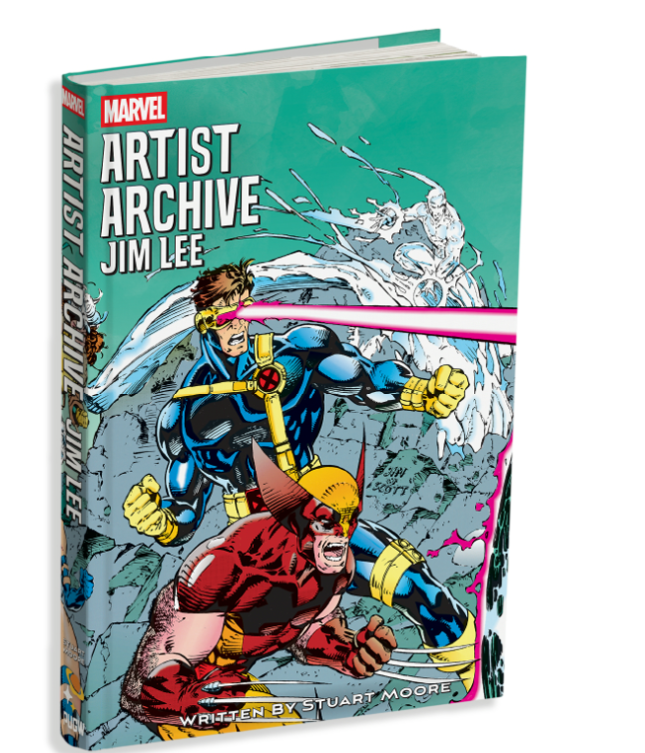
Now live on Kickstarter, Marvel Artist Archive: Jim Lee celebrates Lee’s Marvel years through high-resolution artwork, rarely seen pieces, behind-the-scenes stories, and commentary from Lee and longtime collaborator Scott Williams. More than just an art book, it traces the evolution of one of comics’ greatest artists and the work that helped shape a generation of fans—including yours truly. Judging by the work Moore describes, readers are in for something special. The response has certainly reflected that, with the Kickstarter blasting past its original $25,000 goal and surpassing $243,000 at the time of publication.
We recently had the chance to interview Stuart Moore to discuss Jim Lee’s legacy, uncover forgotten artwork, and talk about what readers can expect from this ambitious new archive.
AAGG: Jim Lee’s Marvel work has been discussed for decades. As you researched this book, what surprised you the most about his artistic evolution?
SM:
I wasn’t exactly surprised, but writing the book reminded me of the scope and variety of Jim’s work. There are beautiful, moody pieces in here, along with gorgeous action shots. The thing that struck me, this time around, was his incredible sense of place. When Jim took you to the Savage Land or the Mandarin’s mansion or the Shi’ar Galaxy, you really felt like you were there.
AAGG: Many fans remember the polished superstar style that defined the early 1990s. Looking back through his earliest Marvel work, what moments showed you he was destined for that level of success?
SM:
There’s some clever storytelling right from the start—a single page from an early issue of Alpha Flight, for instance, that recaps the lives of the entire team in forty (40!) silent panels. The book features a lot of splashy full-page shots, of course, but I also loved picking out little panels that conveyed a complete mood. One that comes to mind: Frank Castle camping out in the jungle, covered with a sudden swarm of tiny moths, almost overcome by the wonders of nature.
AAGG: Before working on Marvel Artist Archive: Jim Lee, were you already a fan of his work? If so, what was your first exposure to Jim Lee, and did revisiting his Marvel career change your perspective in any way?
SM:
Oh, yes. I was reading the X-Men titles when he took over Uncanny, and his work stood out immediately, even with the impressive array of artists working on those books. When I worked as an editor at DC/Vertigo in the early ’90s, Jim was everywhere at Marvel; I remember meeting him for the first time at a convention in London. (We actually overlapped one year in college, but our paths didn’t cross then.)
AAGG: Were there any forgotten covers, illustrations, or promotional pieces that even longtime Jim Lee fans may have never seen before?
SM:
Jim’s Alpha Flight issues have never been reprinted; that work shows him developing his craft and working in the Jim Shooter-inspired Marvel style of the time. We also scrounged up a lot of sketches done for fan magazines, a Wolverine bookmark created for a store signing, and promotional pieces for Heroes Reborn.
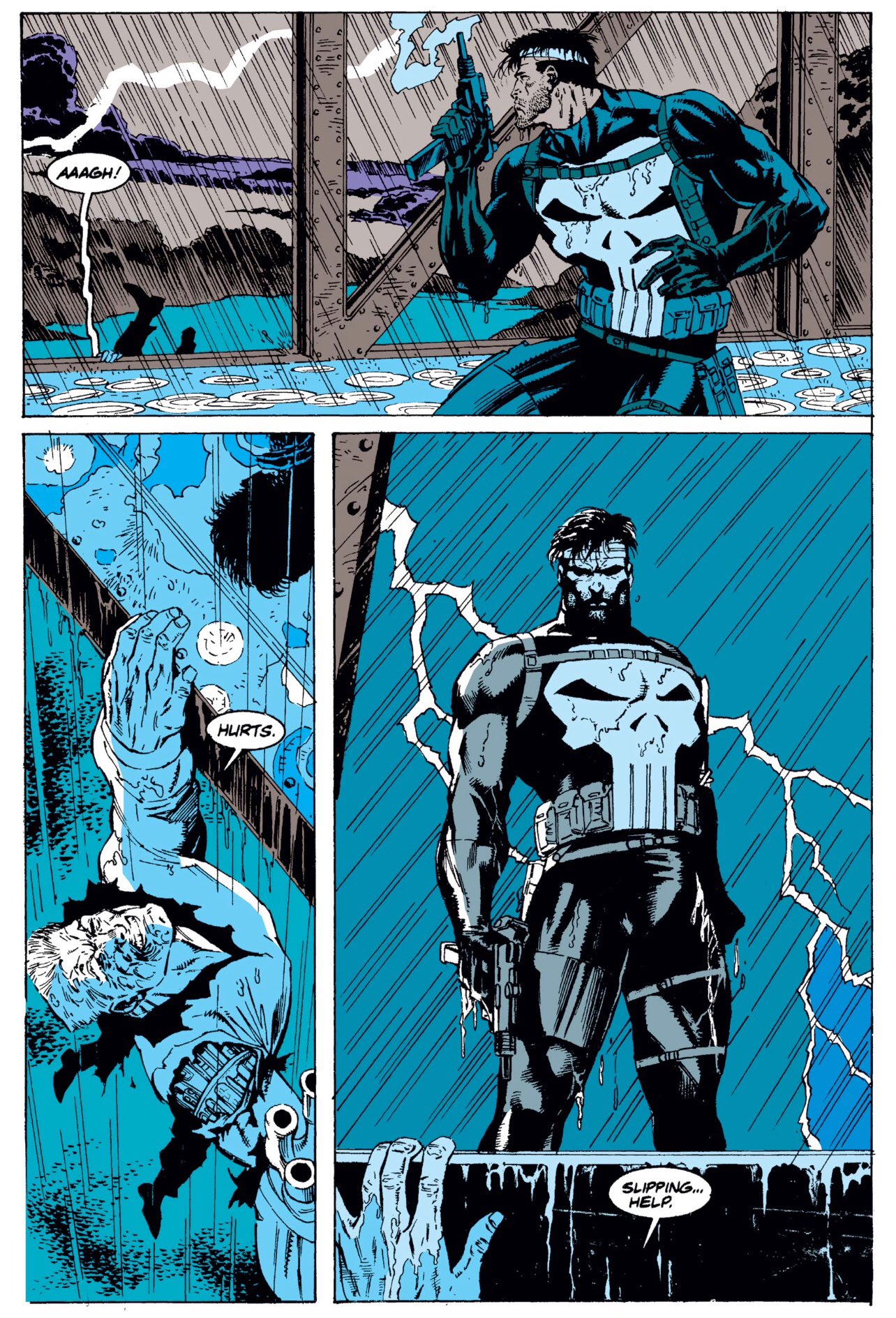
Scott Williams, Jim’s longtime inker and former studiomate, was especially helpful in providing photocopies of pencils and inks. You have to remember, most of this work is from a period before everything was routinely scanned or saved at different stages. Scott had actually saved the pencils and inks for the first page he and Jim ever worked on together—a dramatic splash page from an early issue of Punisher War Journal. That’s in the book.
AAGG: Beyond showcasing spectacular artwork, what did you hope readers would learn about Jim Lee’s creative process, work ethic, and artistic growth throughout his Marvel years?
SM:
We’ve got plenty of commentary from Jim and others, chronicling the way his partnerships with Scott and Whilce Portacio came together. The art is the star of the show, of course, but there’s a whole story going on behind the scenes—I think that comes through.
AAGG: Jim Lee helped define the visual identity of Marvel during a transformative era. What do you think separated his work from his contemporaries?
SM:
There’s a quote in the book where Bob Harras, editor of the X-Men titles and later the company’s editor-in-chief, describes a fold-out Uncanny X-Men cover by Jim as “the most Marvel of covers.” To me, that sums it up. Every now and then an artist comes along and just amps up the superhero aesthetic to the next level. In the early ’90s, that was Jim. It’s all there: character, storytelling, environments, and an overwhelming, propulsive energy.
The Punisher War Journal art is unique because Jim inked some of it himself, deliberately infusing an appropriate level of urban grit that’s different from his straight-out superhero work. Most of that hasn’t been widely seen, either.
AAGG: As both a writer and comics historian, how did you approach providing historical context without overshadowing the artwork itself?
SM:
First off, the art is big and my words are small, which is the way it should be. Second, I couldn’t have put all of this together without all the people who volunteered their time and perspectives, including and especially Jim and Scott Williams.
Overall, I just tried to analyze the work without overanalyzing it, and provide historical perspective where I could. The interviews, many of which came together late in the process, really snapped it all into place. (I hope.)
AAGG: Was there a particular page, illustration, or sequence that made you stop and appreciate Jim Lee’s talent in a new way while assembling this project?
SM:
There’s a breathtaking watercolor piece featuring Wolverine and Psylocke. The X-Men trading cards are pretty impressive—a real range of characters and teams.
And the Heroes Reborn material, which is often overlooked, is really stunning in the context of an art book. Gorgeous full-page shots of Namor, the Fantastic Four, and Captain America…there’s some great storytelling, too, including a page where the Fantastic Four are escaping from Doctor Doom’s sanctum. Scott provided a lot of pencils for those, too.
AAGG: Was there anything you uncovered during your research that challenged a commonly held perception of Jim Lee’s Marvel career or revealed something fans may not already know?
SM:
Anyone who follows Jim’s career closely knows he’s a versatile artist, but I came across some surprises, including a very lyrical, silent Namor story from Marvel Comics Presents. He did a lot of covers, too, for books across the entire Marvel line.
Some of the black-and-white Wolverine sketches use areas of solid black to create a different kind of effect than you get on the comic-book page. There’s humor here too, including some parody art from Marvel’s in-house comedy book, What The–?!
AAGG: If this book inspires someone to experience Jim Lee’s Marvel work for the very first time, where would you recommend they begin—and why?
SM:
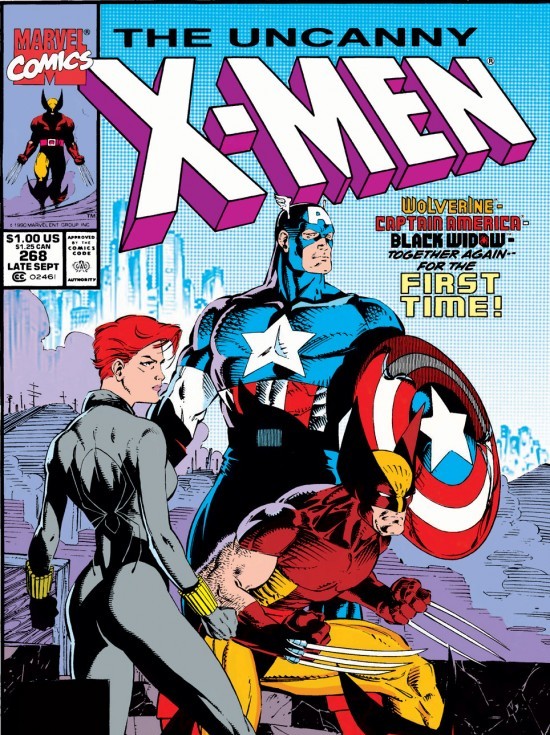
I’d probably say Uncanny X-Men #268, the classic done-in-one story chronicling Wolverine’s flashback meeting with Captain America and the Black Widow. That shows Jim and Chris Claremont working together in top form, and it adds some rich background to the Marvel Universe at the same time. Great stuff.
Whether you’ve followed Jim Lee’s career since his earliest Marvel work or are discovering his art for the first time, Marvel Artist Archive: Jim Lee promises to be far more than a collection of beautiful illustrations. Through Moore’s historical perspective and the contributions of Jim Lee, Scott Williams, and many of Lee’s collaborators, the book offers readers a rare opportunity to witness the growth of an artist who helped redefine superhero comics. For longtime fans, it serves as both a celebration and a time capsule. For newcomers, it may be the perfect place to begin exploring one of the most influential careers in comic book history.
The Kickstarter is live until April 14th, 2026, and can be visited here!